Why You’ll Love This
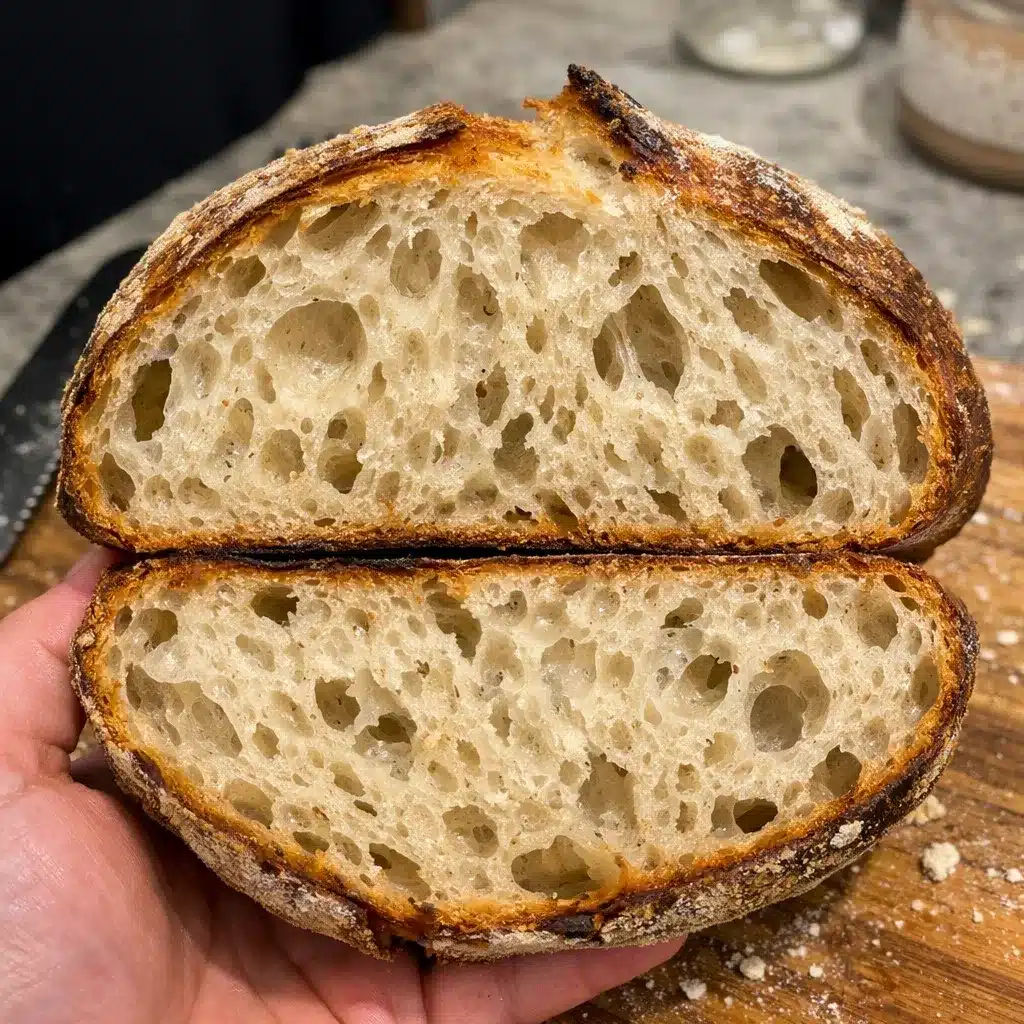
Homemade Sourdough Bread is known for its crisp, golden crust and soft, chewy interior with a subtle tangy flavor. Made using a natural sourdough starter instead of commercial yeast, this bread develops a deeper flavor and wonderful texture. While sourdough takes time and patience, the result is a beautiful artisan loaf that’s perfect for sandwiches, toast, or simply enjoyed with butter.
Ingredients
● 3½ cups (420 g) bread flour
● 1¼ cups (300 ml) warm water
● ½ cup (120 g) active sourdough starter
● 1½ teaspoons salt
● Extra flour for dusting
Preparation Instructions
-
Mix the Dough
In a large bowl, combine the sourdough starter and warm water. Stir until dissolved. -
Add the Flour
Gradually add the bread flour and mix until a rough dough forms. -
Rest the Dough (Autolyse)
Cover the bowl and let the dough rest for 30 minutes. This helps develop gluten and improves texture. -
Add Salt
Sprinkle the salt over the dough and knead gently until fully incorporated. -
Stretch and Fold
Every 30 minutes for about 2 hours, gently stretch and fold the dough over itself several times. This strengthens the dough structure. -
Bulk Fermentation
Cover the dough and let it rise at room temperature for 4–6 hours, or until it has expanded and looks airy. -
Shape the Dough
Turn the dough onto a lightly floured surface and shape it into a round loaf. -
Second Rise
Place the shaped dough into a floured proofing basket or bowl and let it rise for 1–2 hours, or refrigerate overnight for deeper flavor. -
Preheat the Oven
Preheat your oven to 450°F (230°C). If using a Dutch oven, place it inside the oven while preheating. -
Score the Dough
Turn the dough onto parchment paper and score the top with a sharp knife or bread lame. -
Bake the Bread
Place the dough into the hot Dutch oven, cover with the lid, and bake for 20 minutes.
Remove the lid and bake for another 20–25 minutes until the crust is deep golden brown. -
Cool Before Slicing
Allow the bread to cool on a rack for at least 1 hour before slicing.
Kitchen Tools You’ll Need
● Large mixing bowl
● Dough scraper or spatula
● Proofing basket or bowl
● Dutch oven or baking stone
● Sharp knife or bread lame
● Parchment paper
● Cooling rack
Tips
● Use an active, bubbly sourdough starter for the best rise.
● Bread flour works best because it contains higher protein for better structure.
● Refrigerating the dough overnight enhances the complex sourdough flavor.
● Place a small tray of water in the oven if not using a Dutch oven to create steam for a crisp crust.
● Let the bread cool completely before slicing to avoid a gummy texture.
Serving Suggestions
Homemade sourdough bread is delicious with:
-
Butter or olive oil
-
Avocado toast
-
Soups such as tomato basil soup
-
Sandwiches or grilled cheese
-
Cheese boards and charcuterie
It also makes fantastic French toast or homemade croutons.
Storage
Room Temperature:
Store sourdough bread in a paper bag or bread box for up to 3 days.
Refrigerator:
Refrigeration is not recommended because it can dry out the bread.
Freezer:
Slice and freeze the bread in an airtight bag for up to 3 months.
Reheating:
Toast slices or warm the loaf in a 350°F (175°C) oven for about 10 minutes.
FAQs
1. Why didn’t my sourdough bread rise?
Your starter may not have been active enough, or the dough may need more fermentation time.
2. Can I make sourdough without a Dutch oven?
Yes. Bake it on a baking stone or sheet pan and add steam to the oven for a crispy crust.
3. How do I know when the bread is fully baked?
The loaf should sound hollow when tapped on the bottom, and the internal temperature should reach about 205°F (96°C).
Conclusion
Homemade Sourdough Bread is a rewarding baking project that produces beautiful, flavorful artisan bread. With its crisp crust, chewy crumb, and tangy flavor, it’s far superior to most store-bought loaves. Once you master the process, baking sourdough at home can become a satisfying and delicious tradition.
Nutrition Information (Approximate per slice)
Calories: 160
Protein: 5 g
Fat: 1 g
Carbohydrates: 32 g
Fiber: 2 g
Sugar: 0 g
Sodium: 300 mg